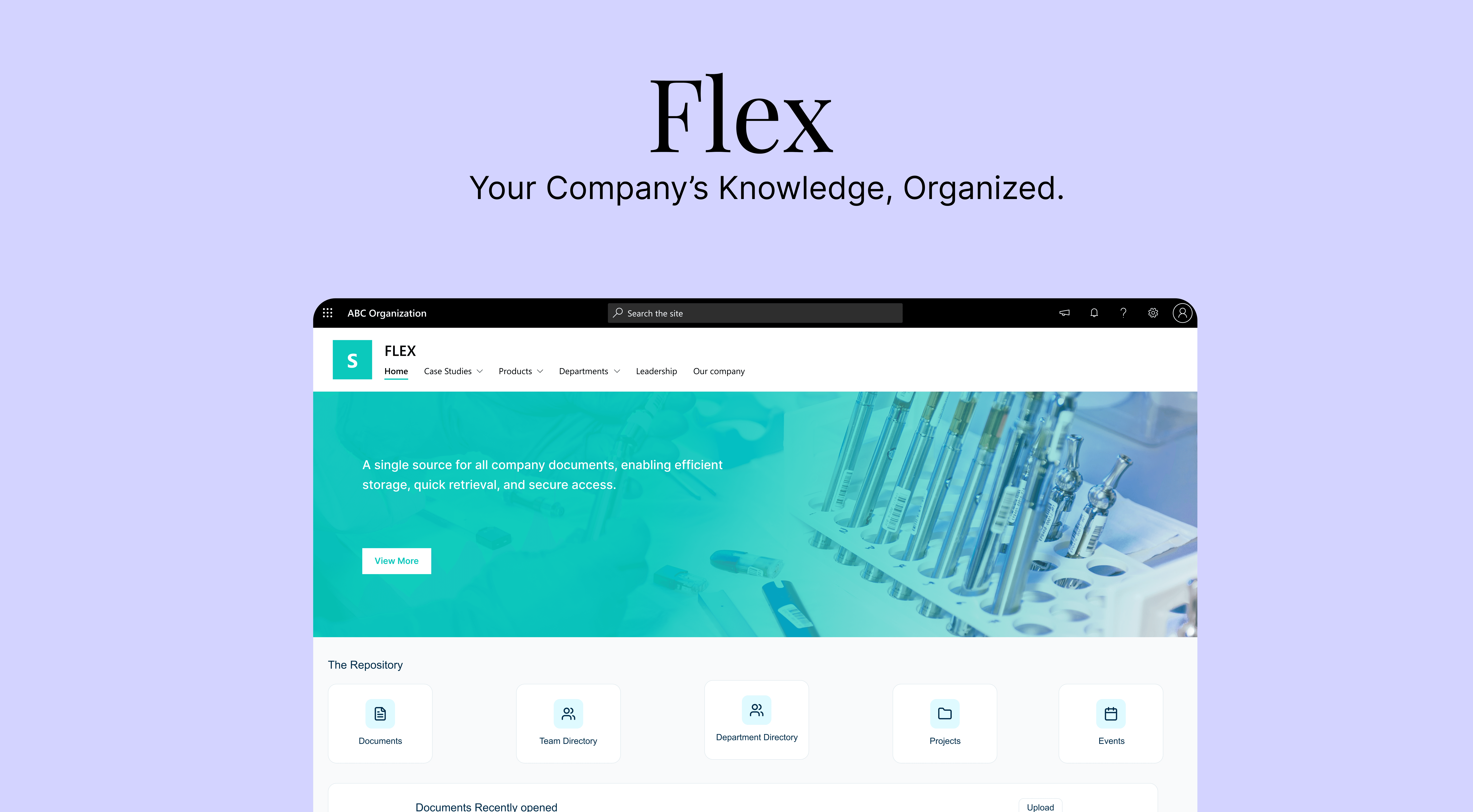
Overview or Context
In many organizations, important files and resources are stored across multiple platforms or remain with individual employees. Teams often spend significant time searching for documents or contacting colleagues to access the right information. This leads to delayed work, slower project onboarding, and loss of organizational knowledge when employees leave. To address this challenge, Flex was envisioned as a centralized repository where teams can securely store, organize, and access company files in one place.

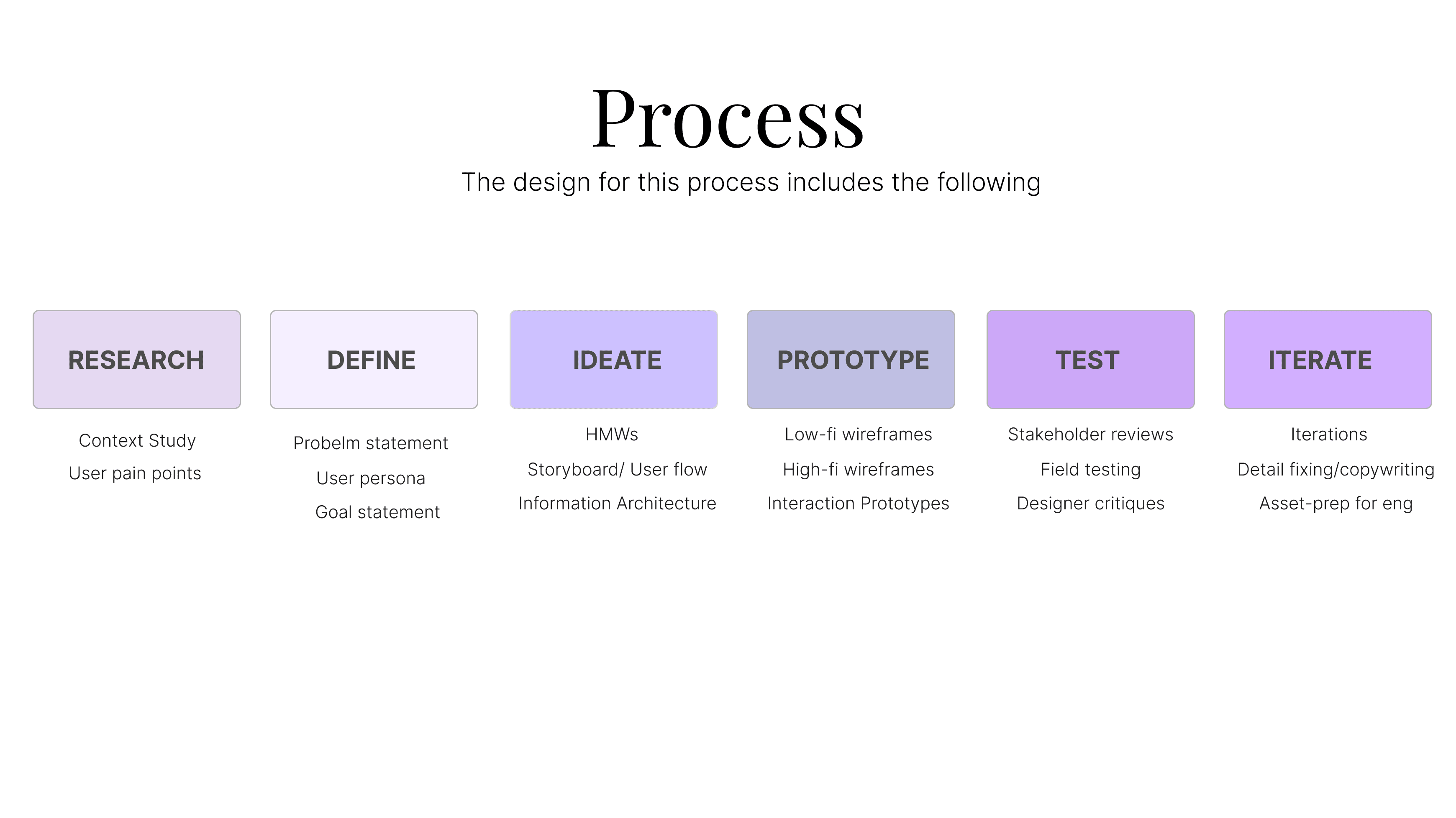
Research
Interviews with employees and team leaders revealed that documents were scattered across multiple platforms and folders, with no standardized structure to organize or retrieve files efficiently. This often led to duplicate or misplaced documents and unclear access controls, raising both productivity and security concerns.
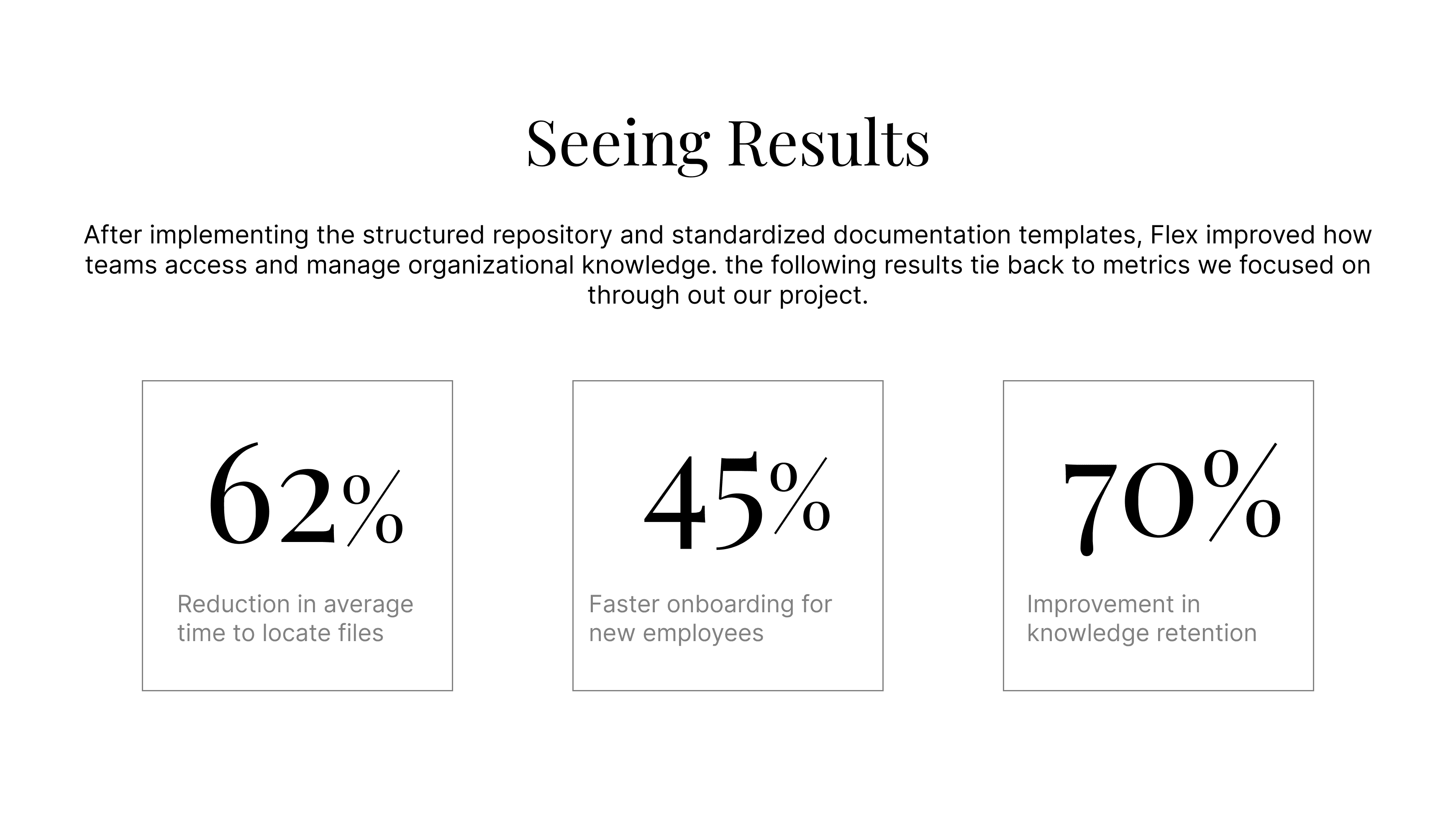
Internal surveys showed that employees spend nearly 50% of their time identifying the right person to obtain required files, while new hire onboarding is delayed by around 50% due to slow access to essential documentation.
How does it affect?
Delayed project execution due to time spent searching for the right files or people.
Slower onboarding for new employees because essential documents are difficult to locate.
Reduced team productivity as employees spend a large portion of time on information retrieval.
Knowledge loss when employees leave, forcing teams to relearn processes.
Duplicate work and inconsistent documentation due to scattered or misplaced files.
Security risks from unclear access permissions and uncontrolled file sharing.
Poor cross-team collaboration since information is not centralized.
Missed opportunities and slower decision-making due to lack of quick access to reliable information.
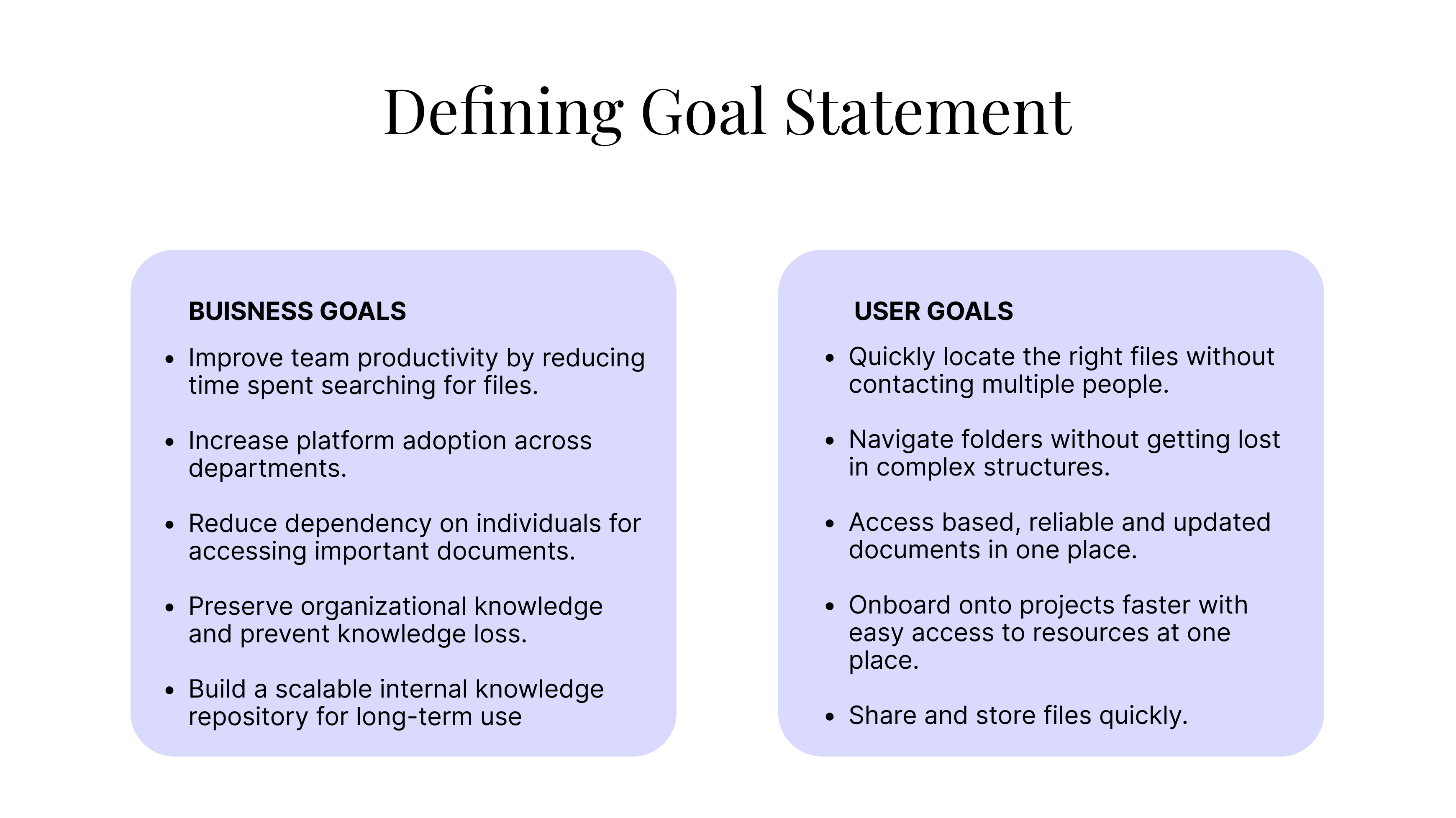
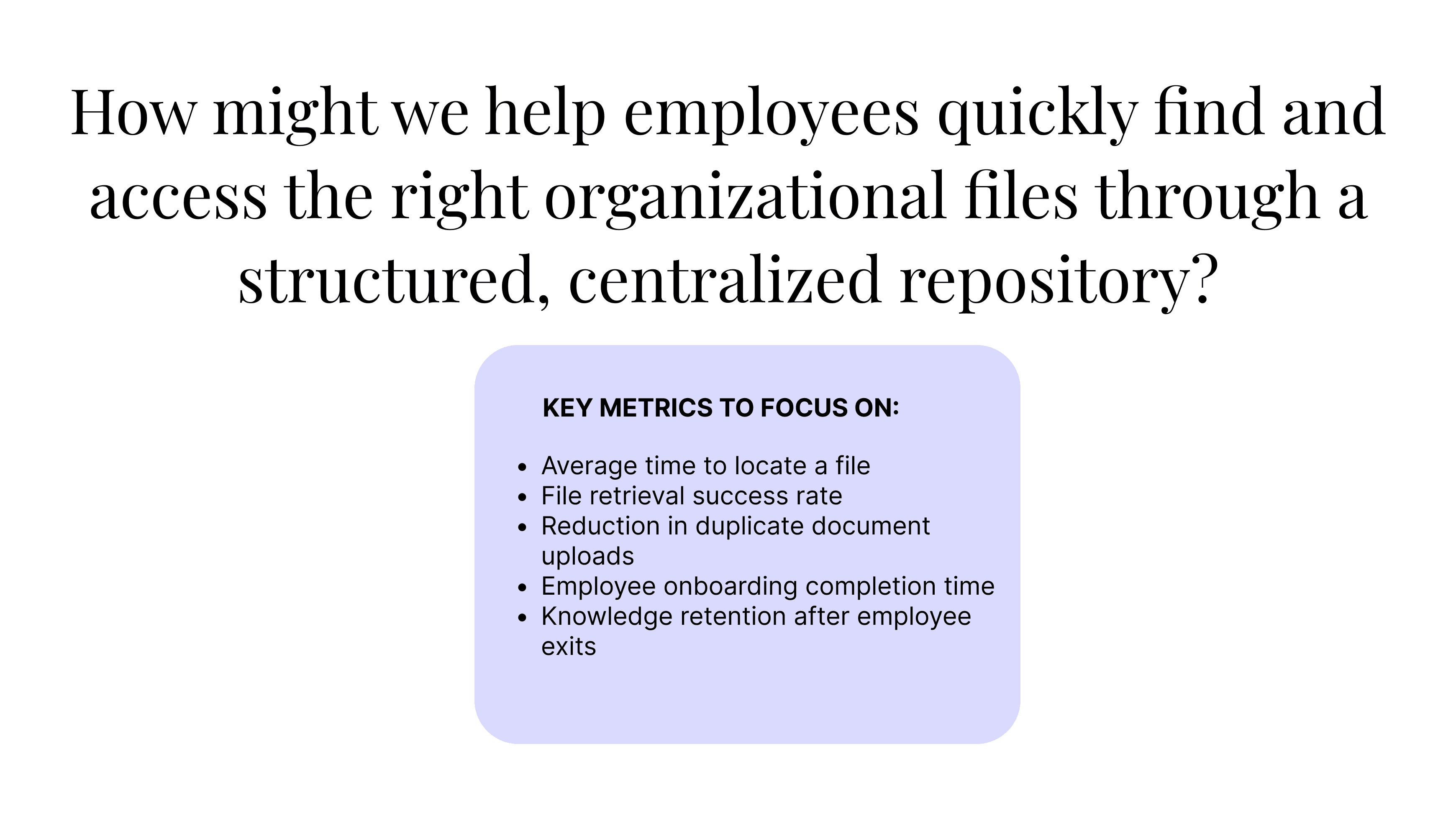
Define and Ideate
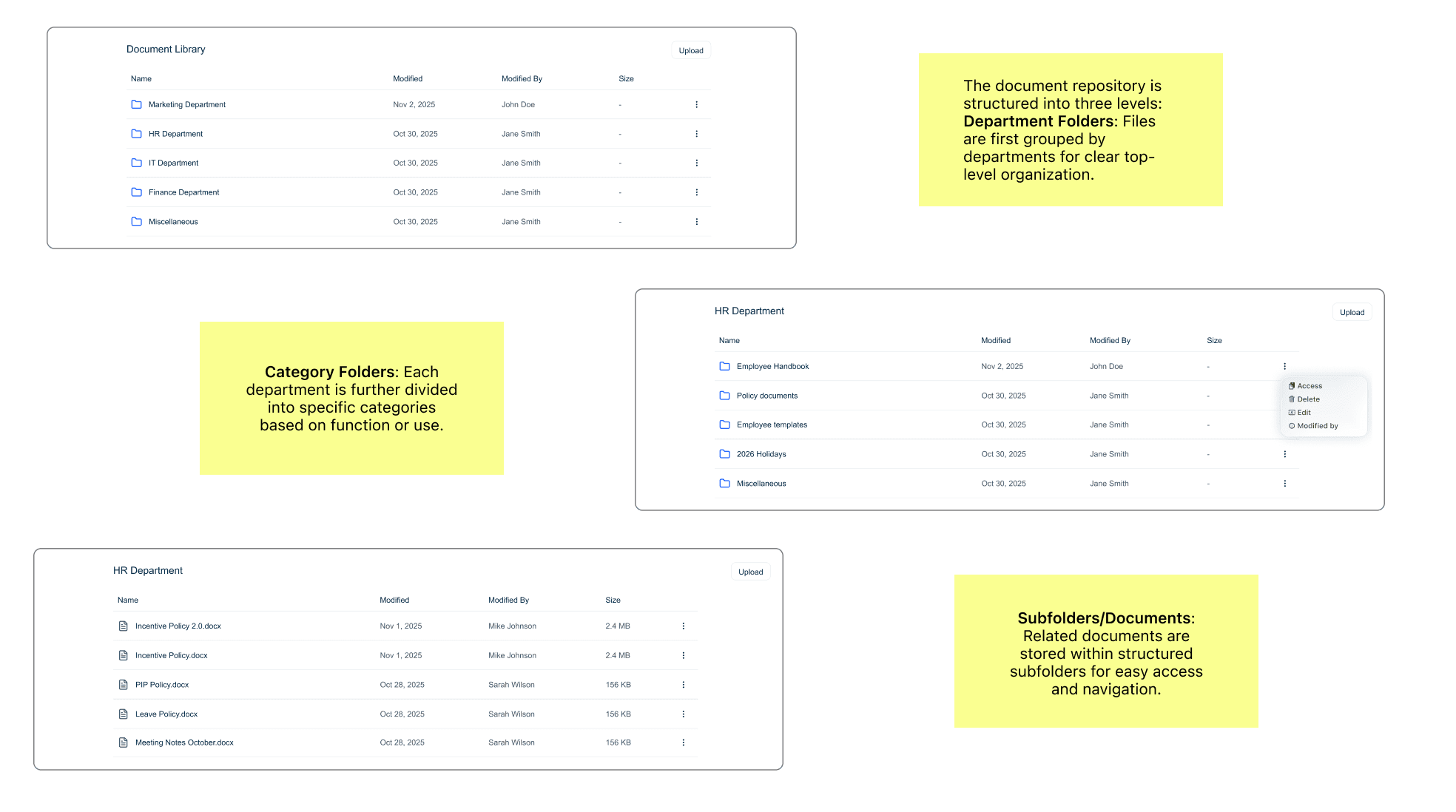
In the Ideate stage, insights gathered from interviews with different teams, departments, and leadership were used to identify the primary need: creating a file organization structure that would be convenient, accessible, and usable across the entire organization.
Since the repository had to serve multiple departments with different workflows, I mapped their needs and iterated on several structural approaches. Through multiple iterations and feedback loops with stakeholders, the final information architecture was developed to ensure clarity, scalability, and ease of navigation.
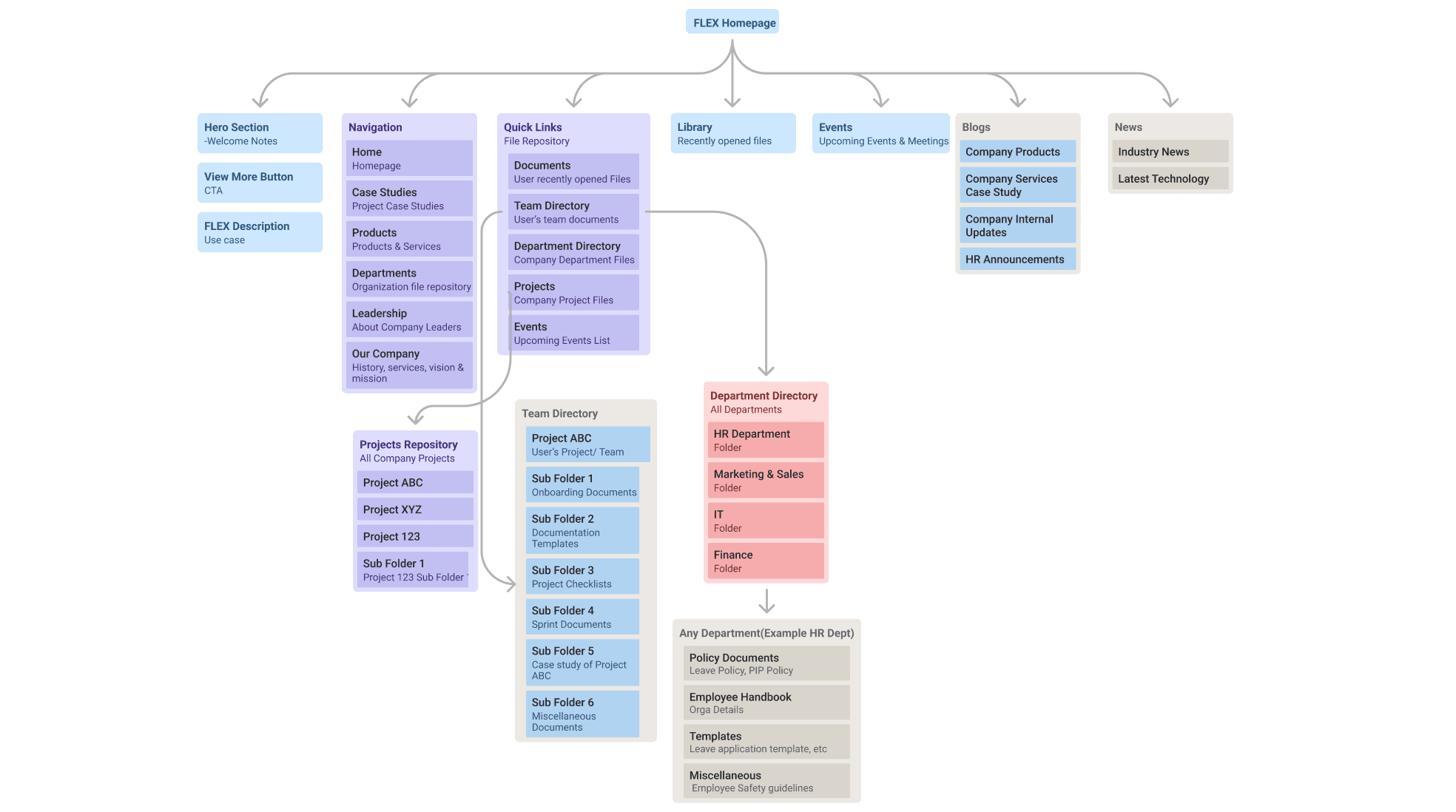
Defining the Flex Experience
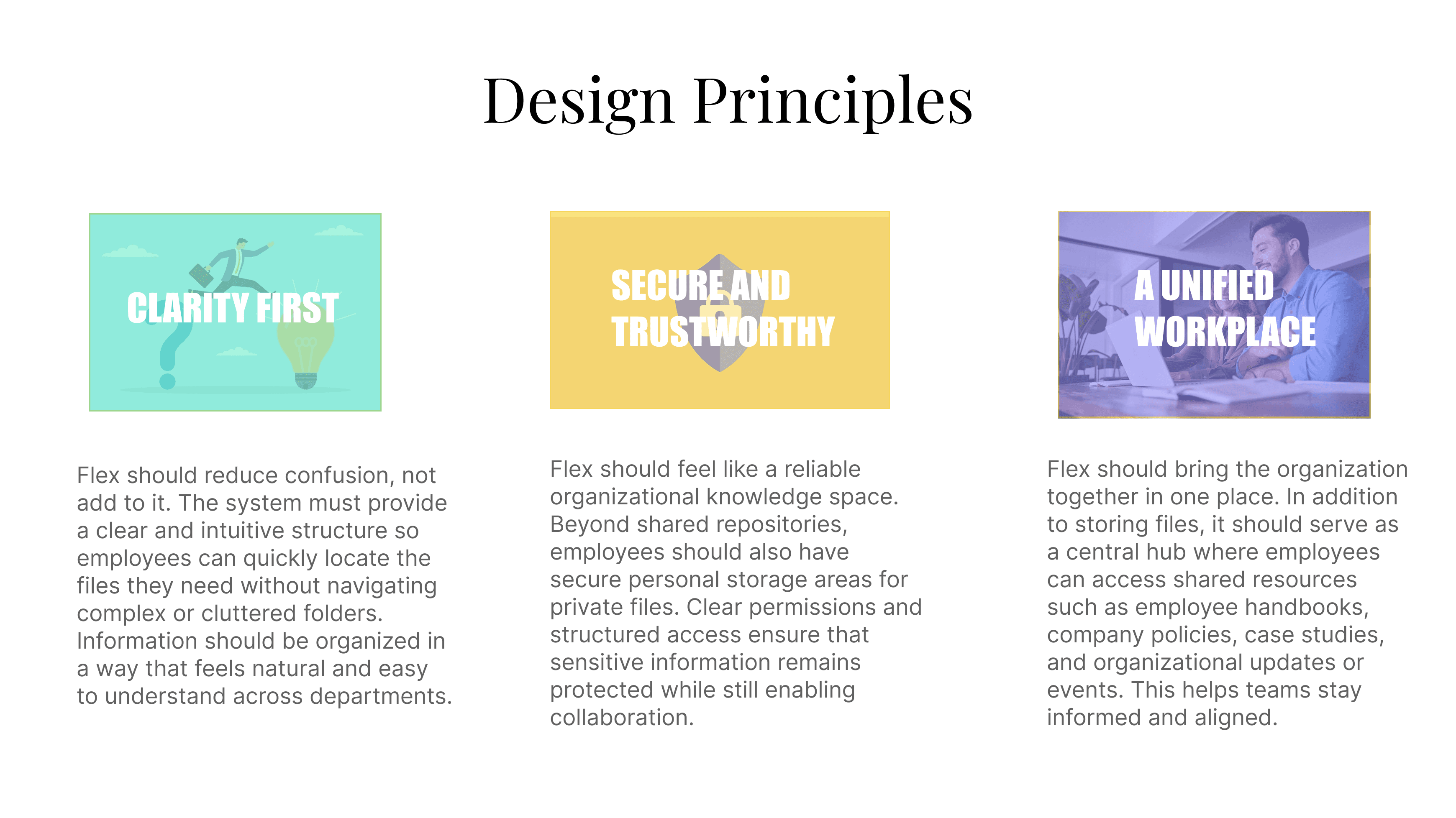
Based on insights gathered from multiple interviews with stakeholders, team leads, and employees across departments, it became clear that the repository needed to go beyond simply storing files. Different teams had varying workflows, concerns around accessibility and security, and a shared need for clarity in how information is organized. These conversations helped identify the core needs that Flex had to address, leading to the following design principles that guided the structure and experience of the platform.
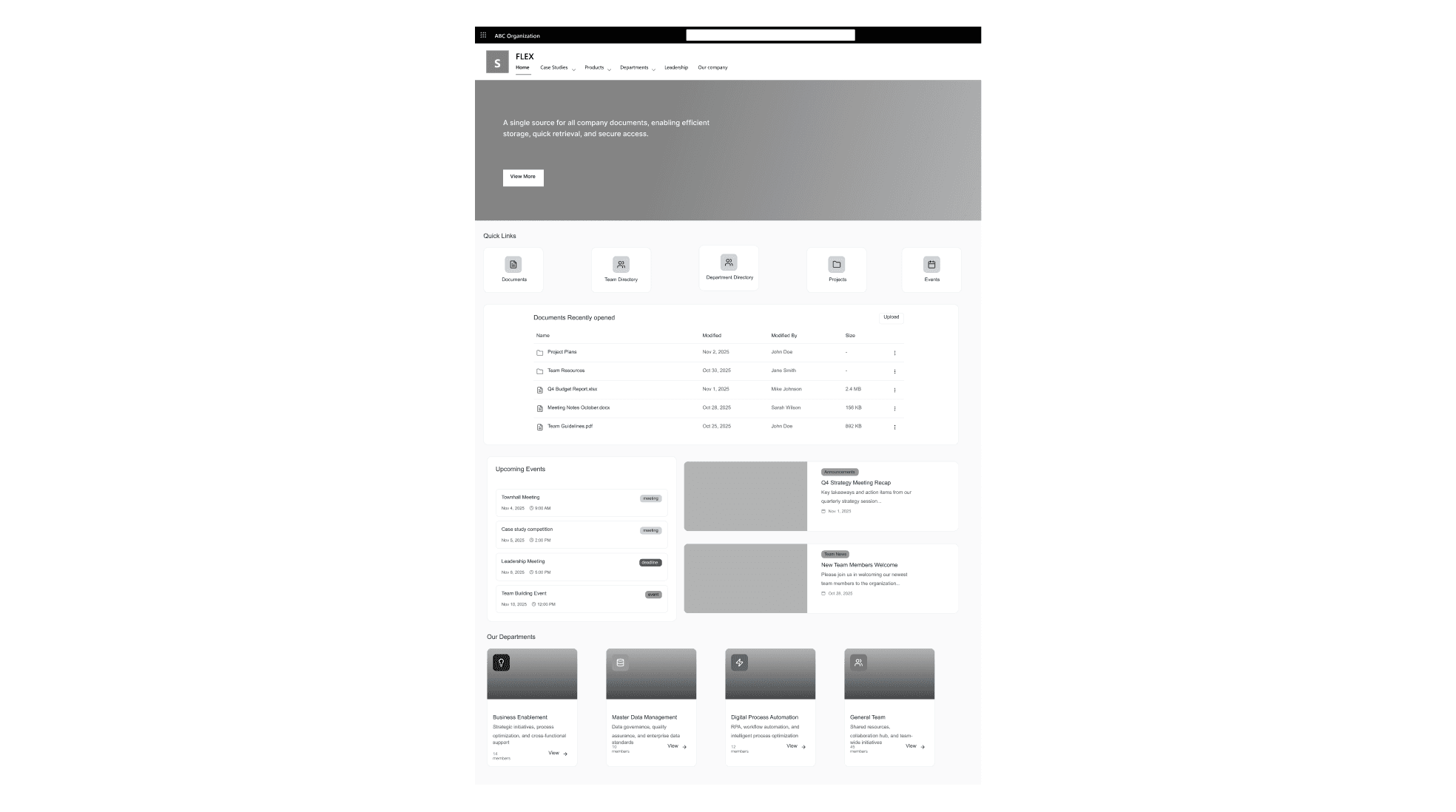
Prototype or "Bringing to Life"
Designed low and high-fidelity screens and interactive prototypes to create a seamless and engaging user experience trying to address the HMW question and design principles mentioned before.
Iteration and Feedback
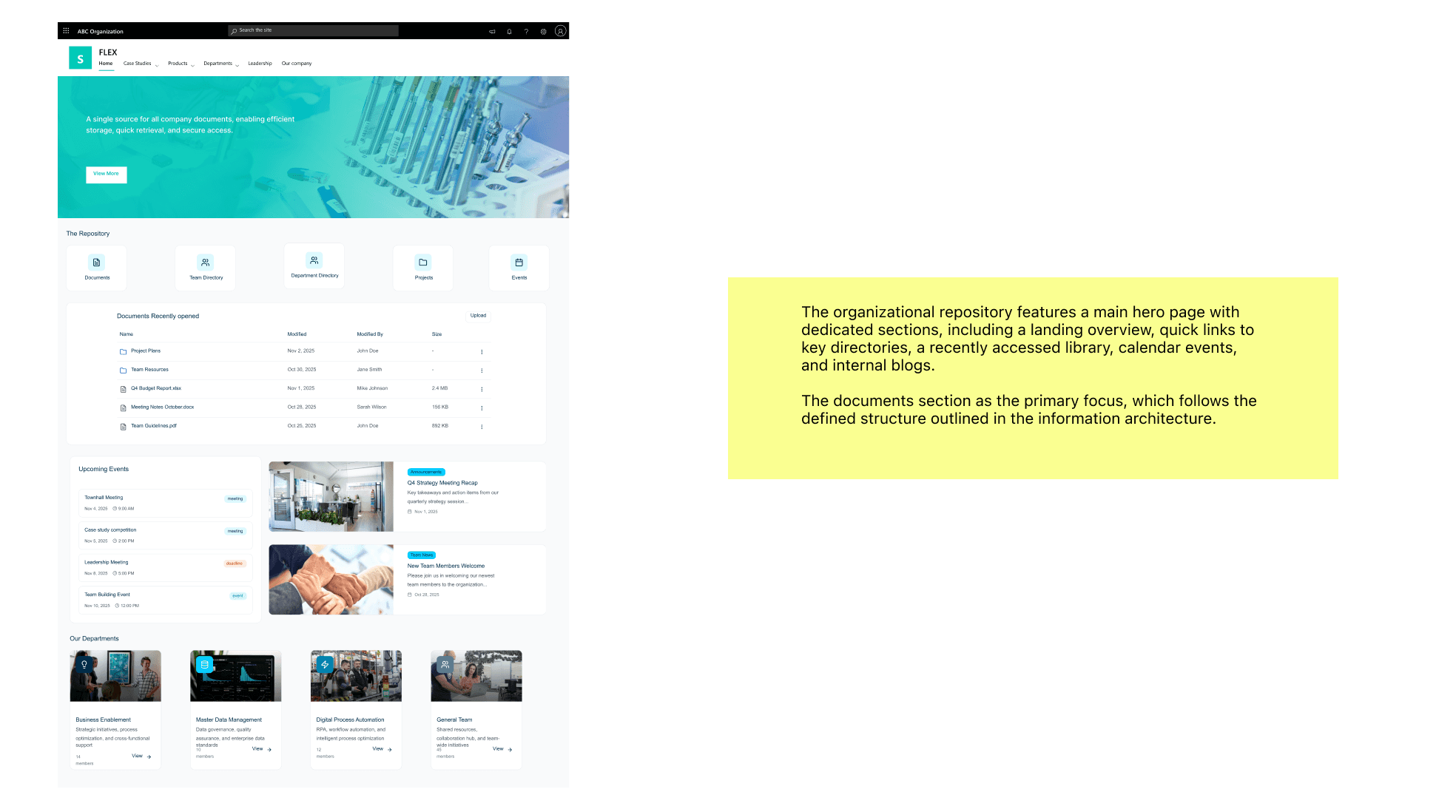
After developing the initial information architecture, design principles, and prototype, I conducted feedback sessions with teams across the organization to validate whether the structure worked for their workflows. During these discussions, leadership highlighted an additional need — standardized documentation templates for project teams to consistently record and share project knowledge.
To address this, I collaborated with multiple project teams to understand how they currently structure project documentation, including checklists, knowledge transfer notes, and project overviews. Based on these insights, documentation templates were introduced into the repository structure, ensuring teams could easily capture and organize project knowledge in a consistent format. These iterations helped strengthen Flex as not just a file repository, but a sustainable knowledge management system. The final versions are as shown below.
Project Learnings
Align with Leadership Early
While employee interviews helped uncover operational pain points, involving leadership earlier in the process could have surfaced strategic expectations sooner, saving iteration time and helping align the repository structure with organizational goals from the start.
Balance Different Stakeholder Needs
Designing a system used across departments required balancing the needs of employees, project teams, and leadership. Continuous feedback helped ensure the repository structure worked for diverse workflows.
Design Principles Shape Perception
Keeping the design principles in focus—clarity, trust, and a unified workspace—helped create a consistent experience. This resulted in employees perceiving Flex as an organized and reliable space for accessing company knowledge.